
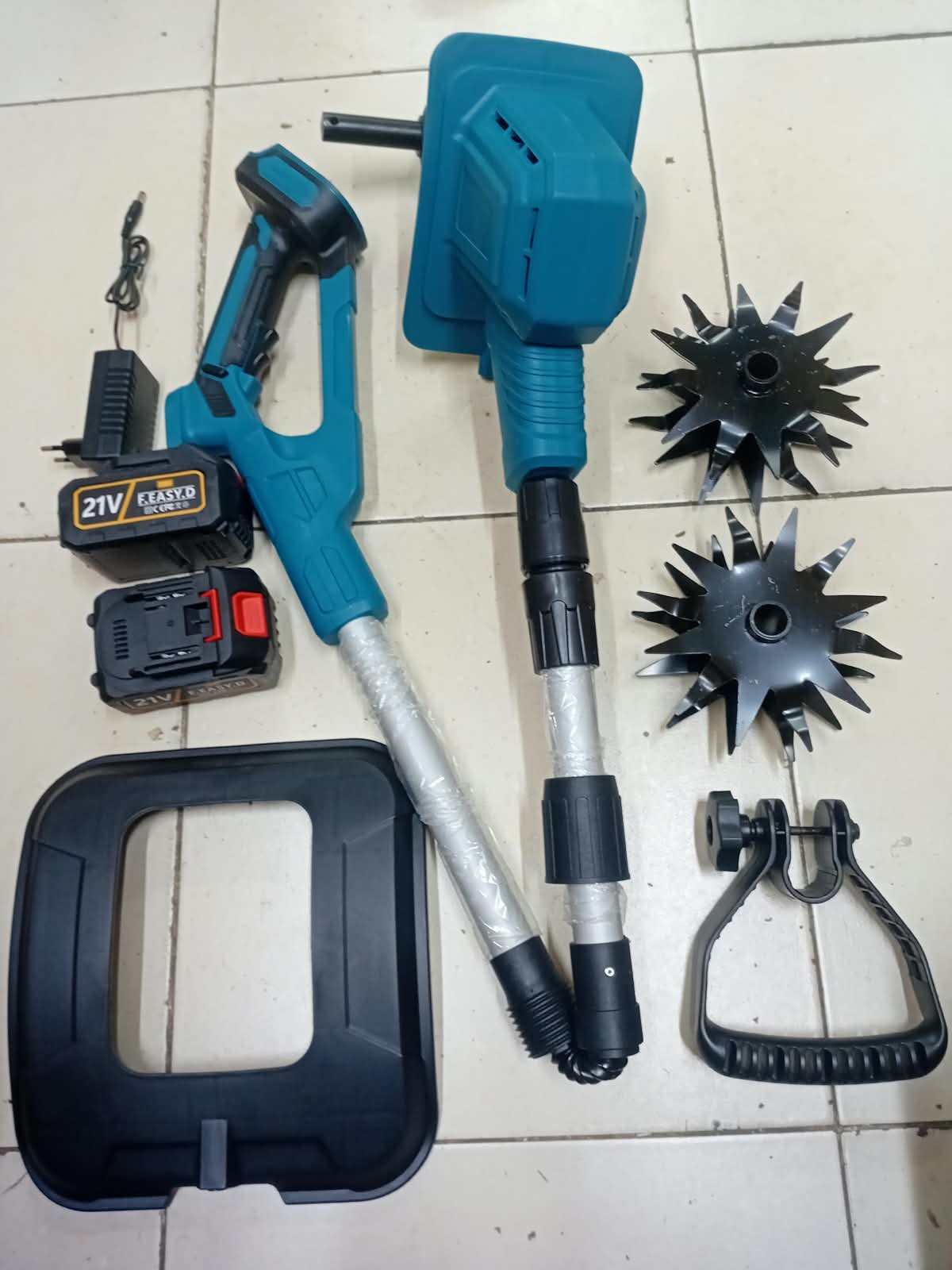
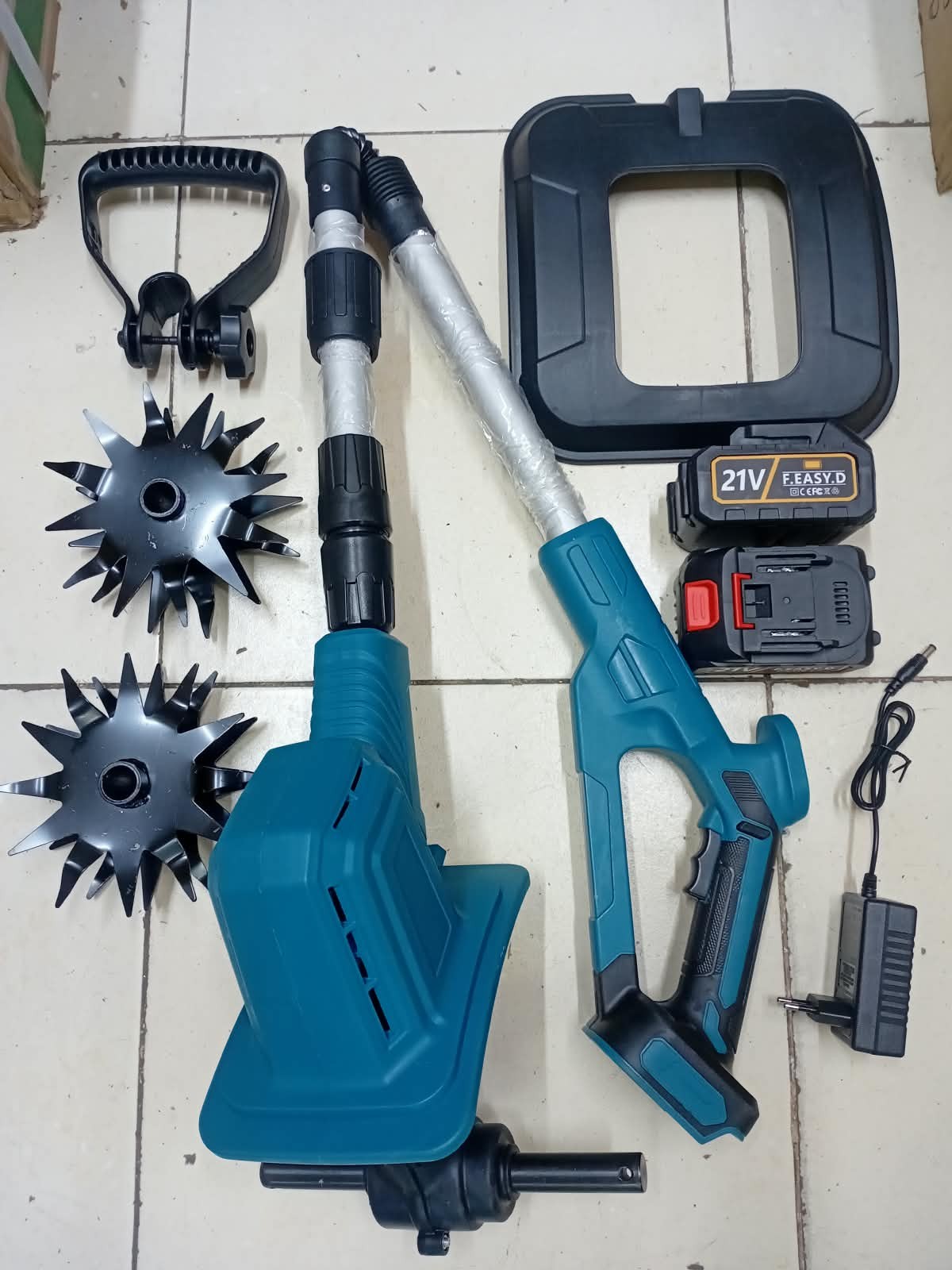
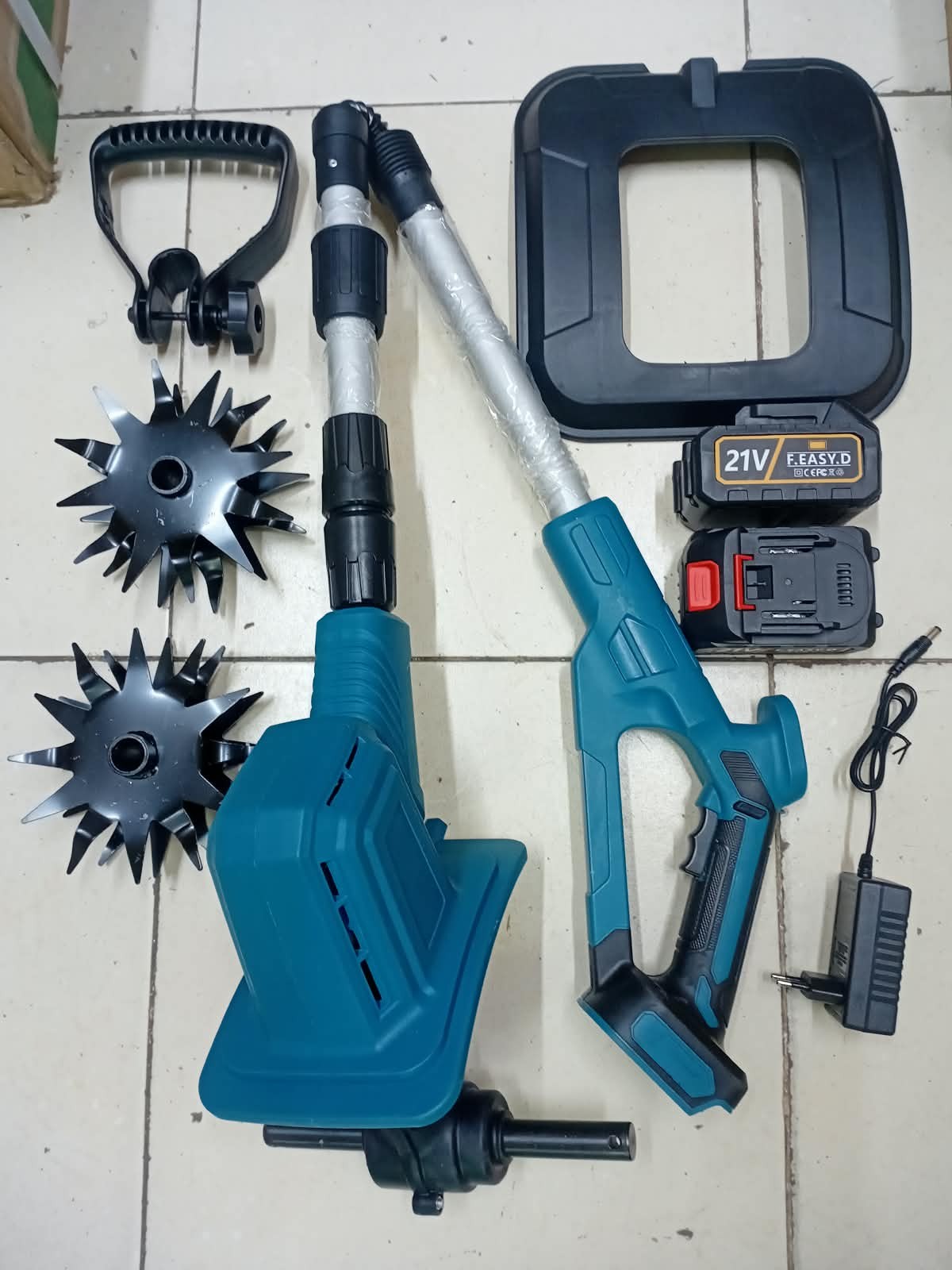
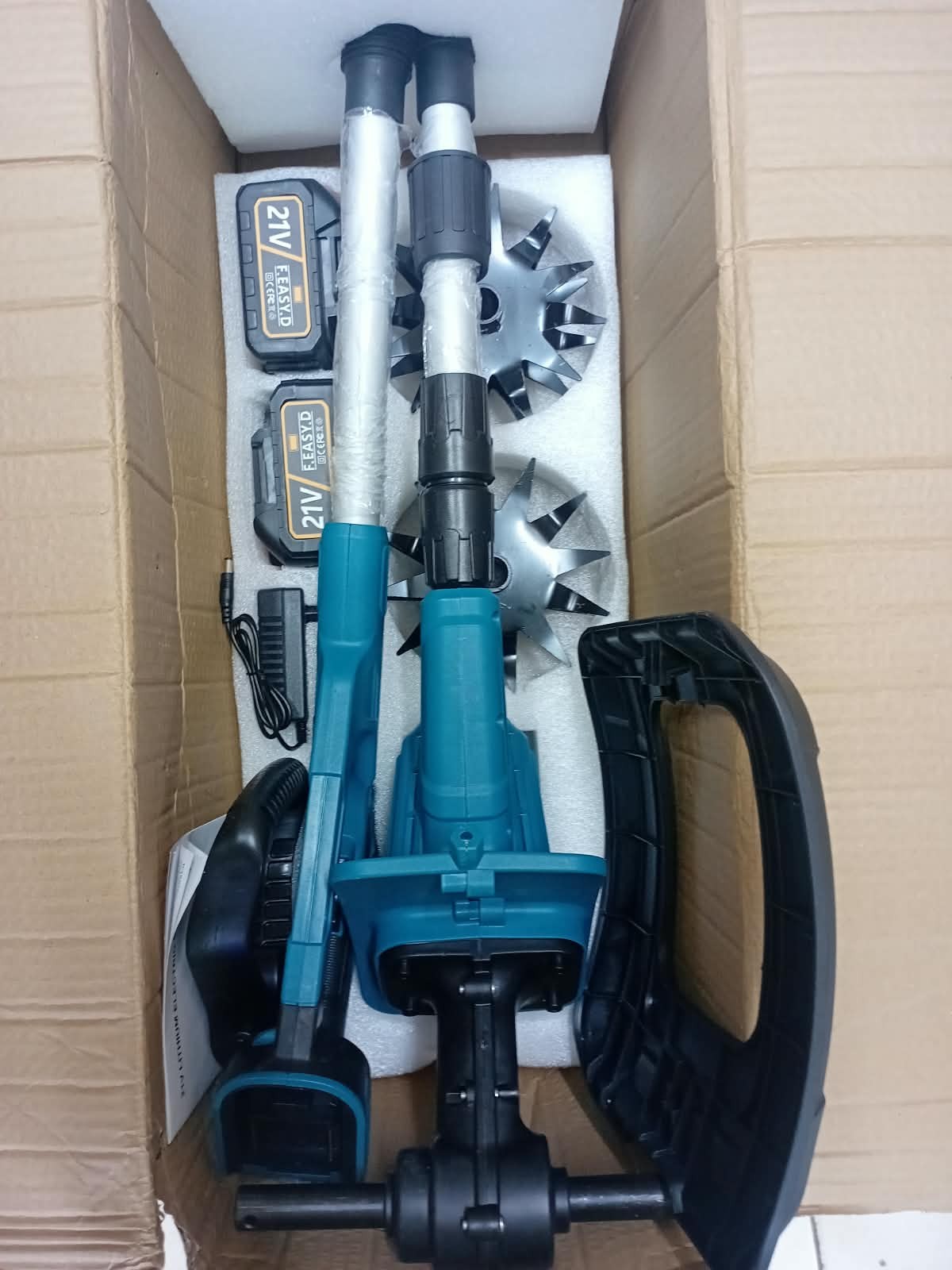



Cordless Tiller 48V
Original price was: KSh11,499.00.KSh9,499.00Current price is: KSh9,499.00.
Product Specifications
- Product type: Cordless Tiller 48V
- Advertised battery voltage: 48V — confirm with supplier
- Power source: Rechargeable battery
- Battery capacity: Confirm with supplier
- Motor power: Confirm with supplier
- Working width: Confirm with supplier
- Maximum tilling depth: Confirm with supplier
- Operating runtime: Confirm with supplier
- Charging time: Confirm with supplier
- Tine material and configuration: Confirm with supplier
- Product weight: Confirm with supplier
- Battery and charger included: Confirm with supplier
- Warranty: Confirm with supplier
Cordless Tiller 48V
The Cordless Tiller 48V is a garden cultivation tool intended to help loosen and prepare soil for planting. A cordless tiller can be a convenient option for selected gardening tasks where portability and freedom from a permanently connected power cable are useful. Its suitability depends on the actual model, battery system, tine design, soil conditions, and the size of the area being cultivated.
For home gardeners, small-scale growers, and people maintaining garden beds, soil preparation is an important step before planting vegetables, flowers, and other crops. The right tiller can help break up suitable soil and make routine cultivation more manageable.
The 48V designation in this product description is provisional and must be checked against the actual product label or supplier specifications before publishing. Please confirm the model, battery voltage, working width, tilling depth, and accessories included with Pejam Tools.
Cordless Tiller 48V: Key Features and Benefits
Cordless operation for flexible gardening
A cordless tiller uses a battery-powered drive system rather than relying on a power cable connected to a mains outlet. This can make moving around a garden bed more convenient, especially where access to an electrical socket is limited.
The practical working time depends on battery capacity, motor demand, soil resistance, and how the machine is operated. Before purchasing, confirm whether the battery and charger are included and whether replacement batteries are available.
Do not assume that every cordless tiller can handle compacted soil or long periods of continuous use. Check the manufacturer’s instructions for the intended working conditions.
Soil cultivation for planting preparation
A tiller is designed to loosen and work suitable soil. This can help prepare planting areas, incorporate certain soil amendments where appropriate, and break up the surface layer before sowing or transplanting.
The results depend on the soil type, moisture level, tiller design, and depth of cultivation. Very hard, stony, or waterlogged ground may not be suitable for a small cordless model.
For best results, assess the condition of the soil before starting. Avoid working excessively wet soil, which can compact and form clods rather than producing a useful planting surface.
Rotating tines for loosening soil
The tines are the working components that engage with the soil. Their design, spacing, material, and rotation determine how the machine performs.
Confirm the tine arrangement and whether the tines can be removed or replaced. Inspect them regularly for damage and remove tangled roots or plant material only after switching off the equipment and following the manufacturer’s safe-cleaning procedure.
Portable design for smaller cultivated areas
Cordless tillers may suit selected garden beds, borders, and small plots, depending on the machine’s power and working dimensions. Their portability can be useful when moving between separate planting areas.
However, portability alone does not indicate the amount of ground a machine can cultivate. Check the working width, tilling depth, weight, and recommended operating time before choosing a tiller for a particular plot.
Applications of the Cordless Tiller 48V
The Cordless Tiller 48V may be considered for suitable garden and soil-preparation tasks once the actual specifications have been verified.
- Vegetable gardens: Preparing suitable soil before planting vegetables.
- Flower beds: Loosening the soil in appropriate planting areas.
- Small garden plots: Working manageable areas where the tiller’s capacity is sufficient.
- Seasonal soil preparation: Helping prepare beds before sowing or transplanting.
- Routine garden maintenance: Cultivating suitable surface soil where weeds and roots do not exceed the machine’s capabilities.
- Planting preparation: Working the soil before adding approved soil amendments or preparing rows, where appropriate.
These are potential uses, not a guarantee that the product is suitable for every ground condition. A compact cordless tiller may not be appropriate for virgin land, heavy clay, deeply compacted ground, or large commercial fields.
How to Choose the Right Cordless Tiller
Before ordering the Cordless Tiller 48V, consider the area you need to cultivate, the soil condition, and how frequently you plan to use the machine.
Confirm battery voltage and capacity
Check the exact battery voltage on the product label. Also ask for the battery capacity, charging time, expected runtime, and availability of replacement batteries.
Voltage by itself does not establish how long the tiller will operate or how much soil it can work. Battery capacity, motor design, tine resistance, and operating conditions all affect performance.
Confirm whether the advertised package includes a battery and charger. If these are sold separately, include their cost when comparing products.
Check working width and tilling depth
Working width indicates the approximate width of soil cultivated in a pass. Tilling depth indicates how deeply the tines can work under specified conditions.
These measurements help you estimate how many passes may be required and whether the tiller suits your planting beds. Ask the supplier for the manufacturer’s stated measurements instead of relying on estimates from product photographs.
A narrow tiller may be easier to move between established plants, while a wider machine may cover more ground per pass. The best choice depends on the layout of your garden and the machine’s verified capabilities.
Consider soil type and condition
Loose, previously cultivated soil is generally easier to work than dense or compacted ground. Soil containing stones, thick roots, or buried debris can obstruct the tines and place additional strain on the machine.
Check the operating manual for the permitted soil conditions. Clear visible obstacles before cultivation and avoid forcing the machine into ground it is not designed to handle.
For small garden beds, gradual cultivation may be more suitable than attempting to loosen the full depth in a single pass.
Assess weight and handling
The weight and balance of a tiller affect how easily it can be controlled. If possible, confirm the product’s weight and handle arrangement before purchase.
Use the machine only in the posture and manner described by the manufacturer. Keep a firm grip, maintain stable footing, and avoid loose clothing near rotating parts.
Confirm spare parts and warranty
Ask about replacement tines, batteries, chargers, service support, and warranty terms. These details can be especially important for equipment used regularly during planting seasons.
Confirm the exact model and package contents so you know which components are supplied and which may need to be purchased separately.
How to Prepare Soil with a Cordless Tiller
Start by identifying the area you intend to cultivate. Remove stones, large roots, wire, and other debris that could obstruct the tines. Check for buried irrigation lines or cables before disturbing the soil.
Read the instruction manual and inspect the tiller, battery, guards, handles, and tines. Ensure that all components are correctly fitted and that the battery and charger are suitable for the machine.
Begin in a small, suitable area to understand how the tiller responds to the soil. Move at a controlled pace and follow the manufacturer’s recommended depth and operating technique. Do not force the tines into resistant ground.
Avoid cultivating soil when it is excessively wet. Soil that sticks heavily to tools or forms dense clumps may be too wet to work effectively. Allow it to reach a more suitable condition before proceeding.
After cultivation, level the soil as needed and prepare the bed for the intended crop. The amount of additional preparation depends on the crop, soil condition, and gardening method.
For general guidance on soil preparation and cultivation, consult the Royal Horticultural Society’s gardening advice. This resource provides general gardening information; the tiller’s manufacturer instructions should guide operation of the specific machine.
Safety and Maintenance
Always switch off the tiller and follow the manual before inspecting the tines, clearing obstructions, adjusting components, or performing maintenance. Remove or disconnect the battery as instructed to prevent accidental starting.
Keep hands and feet away from rotating tines. Wear suitable footwear and eye protection, and use other protective equipment recommended for the task. Keep children and bystanders away from the working area.
Inspect the tines, guards, handles, fasteners, and battery before each use. Do not operate the tiller if safety components are damaged or missing. Never use a damaged battery or an incompatible charger.
After use, remove soil and plant material according to the manufacturer’s cleaning instructions. Store the tool in a dry, secure location and follow the recommended battery charging and storage procedure. Do not expose electrical components to water unless the manufacturer explicitly permits it.
Regular inspection can help identify loose fasteners, worn tines, or other problems before they affect operation. Follow the manufacturer’s servicing schedule and contact an appropriate service provider if repairs are needed.
Why Consider the Cordless Tiller 48V ?
Choosing a garden tiller is about matching the equipment to your actual cultivation needs. A cordless model may offer useful portability, but battery performance, soil conditions, working dimensions, and the machine’s intended workload are equally important.
Before buying, compare the confirmed battery specifications, working width, tilling depth, weight, included accessories, warranty, and availability of replacement parts. These details will help you decide whether the product is suitable for your garden or small plot.
You can browse other equipment through the Pejam Tools online shop. If you need assistance comparing options, describe the size of the area you want to cultivate and the type of soil you have.
Order the Cordless Tiller 48V
Contact Pejam Tools to enquire about current price, stock availability, delivery options, and the exact product package. Confirm whether the advertised voltage is 48V and ask for the manufacturer’s specifications before ordering.
Also verify battery and charger inclusion, working width, tilling depth, runtime, weight, and warranty. With the correct specifications confirmed, you can make a better-informed choice for routine soil preparation and gardening work.


Related products


JTMAX2S-JT35 2 Stroke Brush Cutter
Original price was: KSh15,999.00.KSh13,999.00Current price is: KSh13,999.00.
Reviews
There are no reviews yet.