
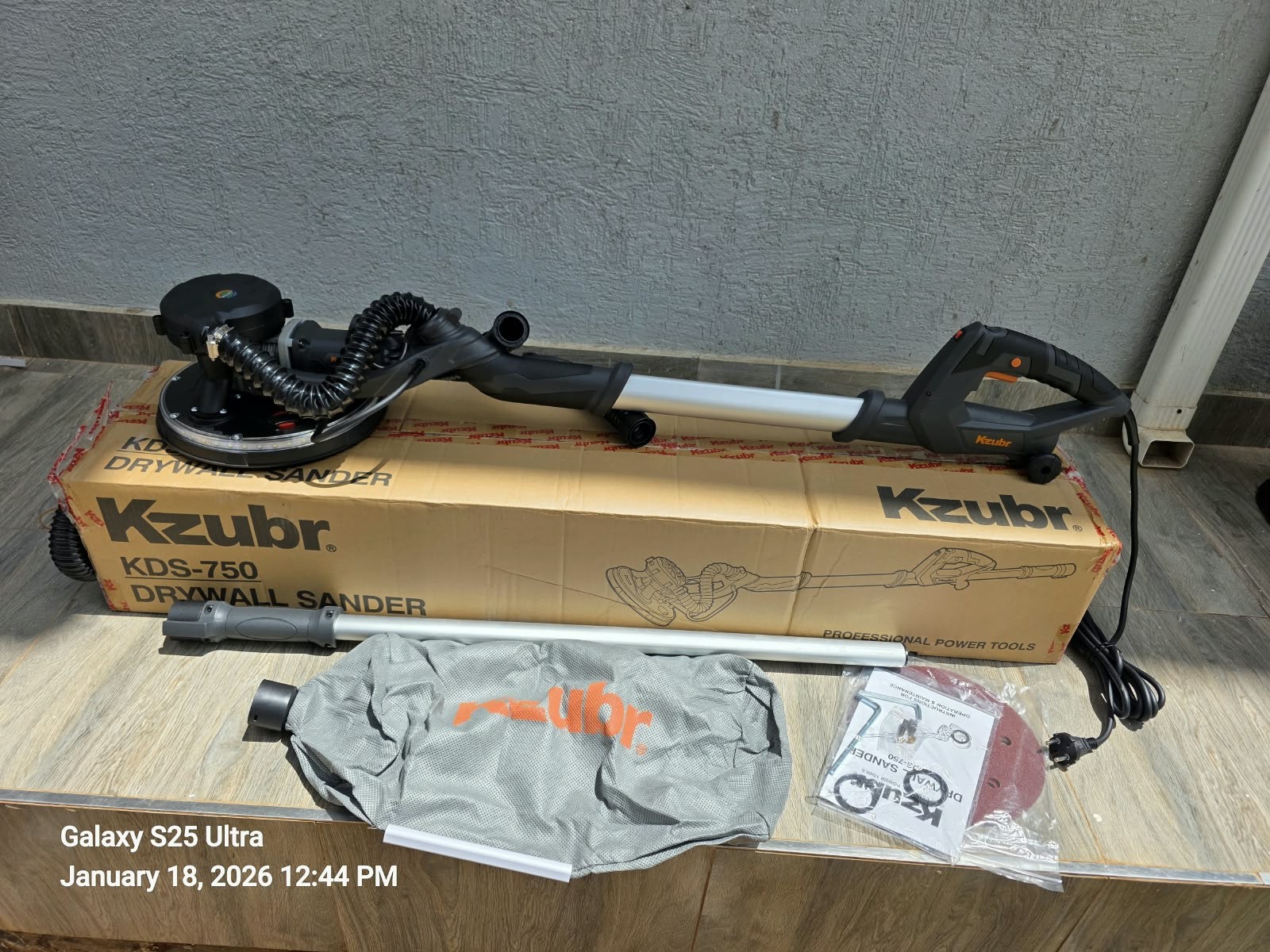


Kzubr Dry Wall Sander
KSh16,499.00
Kzubr Dry Wall Sander
The Kzubr Dry Wall Sander is a sanding tool designed to help prepare suitable wall and ceiling surfaces before painting, decorating or applying a finishing coat. Identified by the model number KDS-750, this tool may be useful for renovation projects, plaster finishing and general surface preparation when its specifications match the job.
Proper sanding helps reduce surface imperfections and prepares walls for a more consistent finish. Using a suitable drywall sander can also make repetitive sanding tasks more manageable than relying entirely on manual sanding. Always follow the manufacturer’s instructions and use the correct abrasive for the surface.
Why Choose the Kzubr Dry Wall Sander?
The Kzubr Dry Wall Sander is worth considering for users who need equipment for drywall and plaster surface preparation. A suitable powered sander can help remove minor surface irregularities and prepare dried joint compound for the next stage of finishing.
The actual performance of the KDS-750 depends on its confirmed motor rating, speed control, sanding head design, abrasive compatibility and dust-management system. Check these details before buying to ensure the machine is suitable for your workload.
Key Product Specifications
- Brand: Kzubr
- Model: KDS-750
- Product type: Drywall sander
- Primary application: Sanding and preparing suitable wall and ceiling surfaces
- Motor power: Confirm with the seller or product label
- Speed range: Confirm with the manufacturer
- Sanding-pad diameter: Confirm before purchase
- Dust extraction: Confirm whether a dust bag, hose or extractor connection is included
- Accessories: Verify the supplied sanding discs and other accessories
- Warranty: Confirm availability and terms with the seller
These specifications should be checked against the exact model being supplied. The model designation alone does not confirm the machine’s wattage, speed or accessory package.
Kzubr Dry Wall Sander for Renovation and Finishing
A drywall sander is used to smooth suitable surfaces after plastering, joint filling or other finishing work. It can help prepare surfaces before primer and paint, provided the material has dried and the sanding method is appropriate.
Drywall and Joint Compound
After drywall joints have been filled and the compound has dried, careful sanding can reduce ridges and uneven areas. Use an abrasive suitable for the compound and avoid removing too much material around joints or fasteners.
The Kzubr Dry Wall Sander may be suitable for this work if the manufacturer’s instructions approve the application. Test the setup in a small area before sanding a large surface.
Plastered Walls and Ceilings
Some dried plaster finishes require sanding to remove minor imperfections. Check that the surface is fully cured or dry as required and that the machine is suitable for the material.
When working overhead, consider the tool’s weight, balance and recommended handling method. Take regular breaks and use a stable work platform where needed.
Renovation and Painting Preparation
Before painting, walls should be clean, dry and prepared according to the coating manufacturer’s instructions. Sanding can help improve surface consistency, but it does not replace filling deep defects, repairing damaged plaster or removing unsuitable coatings.
Use the correct abrasive and avoid aggressive sanding that could damage the underlying surface.
Benefits of Using a Drywall Sander
Helps Prepare Surfaces for Finishing
A suitable sander can help smooth dried joint compound and minor surface irregularities. A properly prepared surface makes it easier to apply primer and paint consistently.
Supports Repetitive Sanding Tasks
Renovation and construction work can involve sanding many joints or large wall areas. Powered equipment may help make this work more manageable, depending on the machine and working conditions.
Useful for Wall and Ceiling Preparation
A compatible drywall sander may be used on suitable wall and ceiling surfaces. Confirm the machine’s intended use and consider the operator’s reach, control and safety when working overhead.
Can Support More Consistent Results
Using a consistent sanding technique and suitable abrasive can help reduce visible ridges and uneven patches. Results still depend on the condition of the surface, the sanding method and the operator’s skill.
How to Choose the Right Kzubr Dry Wall Sander
Before ordering the KDS-750, review the following features and requirements.
1. Motor Power and Speed Control
Check the rated motor power and available speed settings. Different surfaces and abrasives may require different sanding approaches. Follow the manufacturer’s guidance instead of choosing settings based on assumptions.
2. Sanding Head and Abrasive Compatibility
Confirm the sanding-pad diameter and the type of abrasive discs required. Check whether replacement discs are readily available and whether the supplied accessories match the machine.
3. Dust Extraction
Sanding drywall compound and plaster produces fine dust. Ask whether the machine has an integrated dust bag, extraction port or compatible dust hose, and check what equipment is required for effective dust control.
Do not assume that a dust bag or extractor is included unless the seller confirms it.
4. Handling and Reach
If the work involves ceilings or high walls, consider the tool’s weight, balance and handle design. Follow the manual for safe operation and use a stable platform rather than overreaching.
5. Maintenance and Replacement Parts
Ask about replacement sanding pads, brushes or other service parts where applicable. Check the warranty and availability of repair support before purchase.
How to Use the Kzubr Dry Wall Sander
Always follow the KDS-750’s own manual. These general steps apply only when consistent with the manufacturer’s instructions.
- Inspect the tool. Check the housing, power cable, sanding head and dust-collection components for visible damage.
- Prepare the surface. Ensure the material is sufficiently dry and remove loose debris that could interfere with sanding.
- Fit the correct abrasive. Use a compatible disc and make sure it is secured as directed.
- Set up dust control. Connect the approved dust-extraction equipment if supported, and use suitable respiratory protection.
- Test a small area. Start with an appropriate setting and check the result before proceeding across the whole surface.
- Sand evenly. Move the tool steadily without excessive pressure. Avoid holding it in one place for too long.
- Inspect the finish. Check for scratches, remaining ridges or damage, and adjust the technique if necessary.
- Switch off before adjustments. Disconnect power before changing abrasives, clearing blockages or performing maintenance.
- Clean the work area. Remove dust using suitable methods before applying primer or paint.
Avoid sanding wet plaster or uncured joint compound unless the product instructions specifically allow it. Excessive sanding can damage the surface and create unnecessary dust.
Kzubr Dry Wall Sander Maintenance Tips
Regular maintenance can help keep the tool in suitable working condition.
- Remove dust from the machine using the cleaning method recommended by the manufacturer.
- Inspect the power cable, plug, switches and housing before use.
- Replace worn or damaged sanding discs promptly.
- Keep ventilation openings clear according to the manual.
- Check dust hoses, bags and connections for blockages or damage where fitted.
- Store the machine in a clean, dry place.
- Use only compatible replacement parts and accessories.
- Arrange professional servicing if the tool overheats, vibrates unusually or develops an electrical fault.
Never open the motor housing or carry out electrical repairs unless you are qualified and authorised to do so.
Drywall Sanding Safety and Dust Control
Fine sanding dust can irritate the eyes and respiratory system. Use effective dust extraction where available, wear appropriate eye protection and choose respiratory protection suitable for the dust exposure and workplace conditions.
Keep other people away from the sanding area where practical. Follow the safety instructions for the sander and the materials being worked on. Do not assume that a dust bag alone provides sufficient protection.
For workplace guidance, consult the UK Health and Safety Executive’s construction dust information. Apply the relevant safety requirements for your worksite in Kenya.
Buy the Kzubr Dry Wall Sander from Pejam Tools Kenya
Looking for tools for renovation, construction or surface preparation? Browse the Pejam Tools Kenya online shop to explore available equipment. You can also visit the Pejam Tools homepage to browse other product categories.
Before ordering the Kzubr KDS-750 Dry Wall Sander, confirm its current price and availability, motor power, speed settings, sanding-pad size, dust-extraction arrangement, included accessories and warranty.
Selecting the correct tool and abrasive for your project can help improve surface preparation and reduce avoidable damage. If you are unsure whether the KDS-750 is suitable for your work, explain the materials and typical tasks to the seller before purchasing.
Frequently Asked Questions About the Kzubr Dry Wall Sander
What is the Kzubr Dry Wall Sander used for?
It is designed for sanding suitable drywall and wall-finishing surfaces. Confirm the materials and applications approved for the KDS-750 in the manufacturer’s instructions.
What is the model number?
The product is identified as the Kzubr KDS-750 Dry Wall Sander.
What is the motor power of the KDS-750?
The motor power has not been verified here. Check the product label or request the manufacturer’s specifications from the seller.
Does it include dust extraction?
The included dust-collection equipment has not been confirmed. Ask whether a dust bag, hose or extractor connection is supplied and what additional equipment is required.
Which sanding discs does it use?
Confirm the sanding-pad diameter and compatible disc type before purchasing replacement abrasives.
Can it be used on ceilings?
It may be suitable for compatible ceiling surfaces if the manufacturer permits the application. Follow the manual and use safe working positions and appropriate dust protection.
How should I maintain the sander?
Clean it according to the manual, inspect the cable and sanding head, keep ventilation openings clear and replace worn abrasives. Disconnect power before adjustments or maintenance.
Where can I buy the Kzubr Dry Wall Sander in Kenya?
Browse the Pejam Tools Kenya online shop and contact the seller to confirm stock, price and technical specifications.
Order the Kzubr Dry Wall Sander
The Kzubr Dry Wall Sander is an option to consider for suitable wall and ceiling finishing work. Verify the KDS-750’s specifications and included accessories before ordering, and always follow the manufacturer’s operating and safety instructions.


Reviews
There are no reviews yet.